An allotment teaches you things no garden centre can: that a hoe beats a sprayer, that a glut of courgettes is both a triumph and a problem, and that a plot is never really finished. It also, if you are not careful, teaches you what a bad back feels like in May.
If you have just taken on a plot — or you are hovering over the waiting list form — here is what actually matters in the first year, and beyond.
Getting a Plot in the First Place
Waiting lists in cities can run for years; that is simply how it is. Put your name down with the council, but do not stop there. Parish councils, allotment associations, church land and private sites all have plots, and some are far less oversubscribed. Ask at the local garden centre, at the pub, or at the allotment gate itself — plot-holders usually know who is about to give one up.
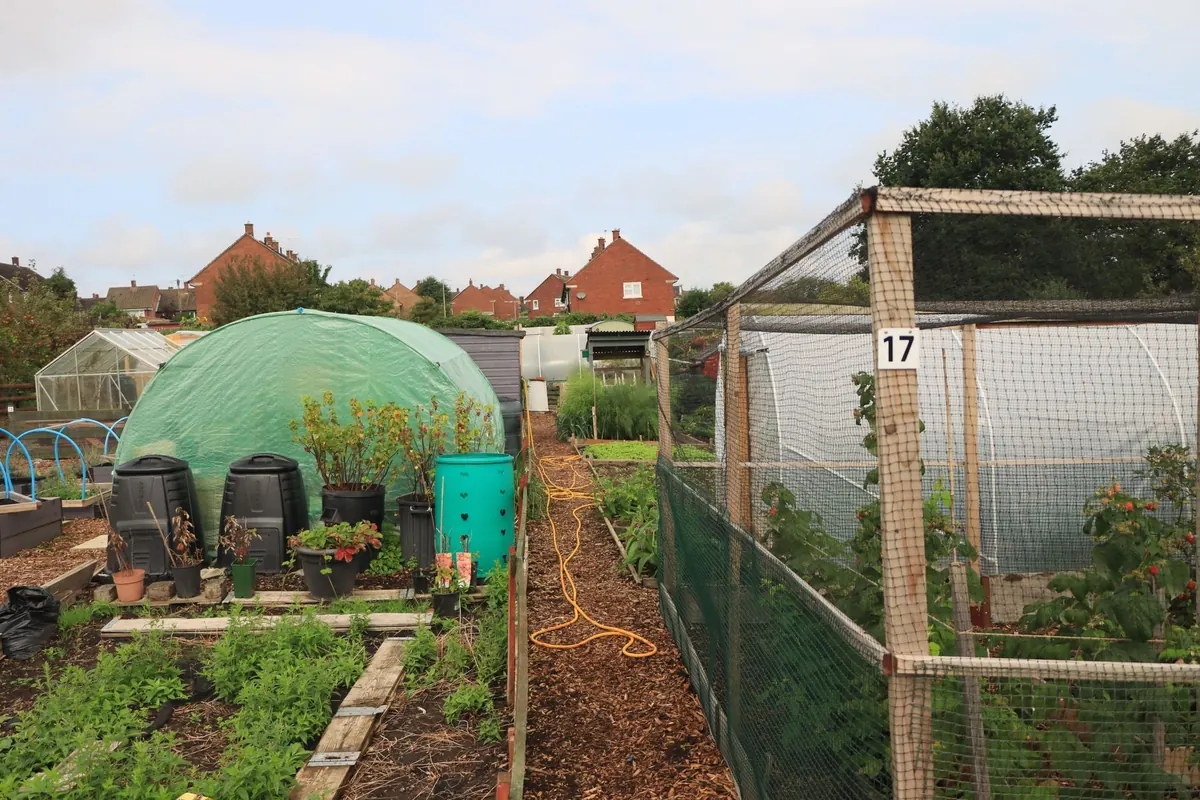
Before you sign anything, visit the site on a weekday and at a weekend. Check where the water taps are, whether you can get a car near enough for a manure delivery, whether the plot floods in winter, and whether trees on the boundary shade it for half the day. Read the tenancy agreement properly, because rules on sheds, bonfires, hedges, grass paths and polytunnels vary enormously from site to site.
Ask about rent and notice period too. Rent is generally modest, but it is not the whole cost — tools, seeds, compost, netting and the occasional delivery add up. If the plan is mainly to save money on vegetables, be honest with yourself about how that usually works out.
And if a plot looks like a solid field of brambles, it is perfectly acceptable to walk away. Ask what the committee will do about clearing it before you commit.
Look Before You Dig
Resist the urge to hire a rotavator on day one. Running one over couch grass or bindweed chops it into a thousand new plants, each of which will be delighted to meet you.
Spend your first couple of visits just looking. Where does the sun fall? Where does water sit after rain? Which corner is riddled with perennial weeds and which part looks workable? Sketch a rough plan. Mark out beds you can reach from both sides — around 1.2m wide is a comfortable working width — with paths wide enough for a wheelbarrow.
Then cover the worst areas. Cardboard weighed down with compost or manure, black plastic, or old carpets (if the site allows them) will smother weeds for a season while you work the rest. If you have a heart condition, a bad back or you have not done heavy work in years, get checked over before you start digging in earnest. An allotment is a marathon, not a weekend.
What to Grow in Your First Year
Grow things that are expensive or tasteless in shops, and things that forgive a bit of neglect.
- Courgettes and summer squash — two plants will feed a household; three will feed the street.
- Potatoes — cheap, and they break up rough ground as you earth them up.
- Runner and French beans — hugely productive, and they fix nitrogen as a bonus.
- Salad leaves, radishes and spring onions — fast, and they keep you interested in May when everything else is still sulking.
- Onion sets and garlic — planted in autumn, largely ignored, harvested in summer.
- Chard and kale — cut-and-come-again leaves right through the cold months.
- Herbs — rosemary, thyme and sage. Mint goes in a pot, or it will take over the parish.
Leave the fiddly crops — cauliflower, celery, Brussels sprouts, outdoor tomatoes in a wet year — until you know how your plot behaves. Nothing kills enthusiasm faster than a row of blown cauliflowers.
A Year on the Plot
Broadly, the year runs like this. In late winter and early spring you dig, spread compost, chit potatoes, sow under cover and plant onion sets. From late spring onwards, sowing becomes a succession: little and often, every three weeks or so, rather than one enormous row of lettuce that all bolts in the same week. Summer is watering, weeding, tying in and eating. Late summer and autumn mean harvesting, sowing green manure or overwintering crops, and clearing what has finished. Winter is for the structural jobs — paths, beds, compost heaps, sharpening tools — and for ordering seed while the catalogues still feel like a pleasure rather than a to-do list.
Watering, honestly
Water deeply and less often, in the evening or early morning, aiming at the roots. A quick sprinkle achieves almost nothing except encouraging shallow roots. Mulch around thirsty plants. If you can, sink a couple of cut-off plastic bottles upside down beside courgettes and tomatoes so the water goes below the surface rather than running off.
The Pitfalls Nobody Warns You About
- Planting far too much. Half a row of parsnips is plenty for most families.
- Going away in August and returning to a jungle.
- Sowing everything in one heroic weekend.
- Ignoring the paths. They quietly become the weed reservoir that seeds your beds.
- Buying tools before you know what you need. A spade, a fork, a hoe, a rake and decent gloves will see you through year one.
- Comparing your plot with the immaculate three-rod masterpiece next door. They have had thirty years.
- Skipping committee meetings and then being surprised by the rules.
Neighbours, Rules and the Water Tap
An allotment site is a community with a shared water supply and a shared tolerance level. Turn taps off properly, do not hog the communal muck heap, keep your grass paths cut, and do not let your plot seed the whole site with dandelions. If you are struggling — illness, a new baby, a job that has swallowed your weekends — tell the committee. Most would far rather help than send a letter.
Start Small and Stay With It
Aim to have half the plot in decent cultivation by the end of year one, not all of it. Keep a notebook. Write down what you sowed, when it went in, what the weather did and what you would do differently. That notebook will be worth more to you than any book you buy.
And when it goes wrong — and it will, in places — remember that almost nothing on an allotment is permanent. You can dig it out, cover it over, replant it. That is the whole point. Next spring, start again.
Photo: Jan Wright / Pexels